Two custom logo mats can look identical in a proof and wear very differently after one winter of foot traffic. The difference is almost always material: what the surface is tufted from, and what the mat is backed with. Those two choices decide whether your logo still reads cleanly in month eighteen, and whether the mat stays flat and safe underfoot. They matter far more than a low unit price or vague “heavy duty” marketing. This guide walks through the face fibers and backing compounds used in commercial logo matting, and where each one earns its place.
Start with the two decisions that actually matter
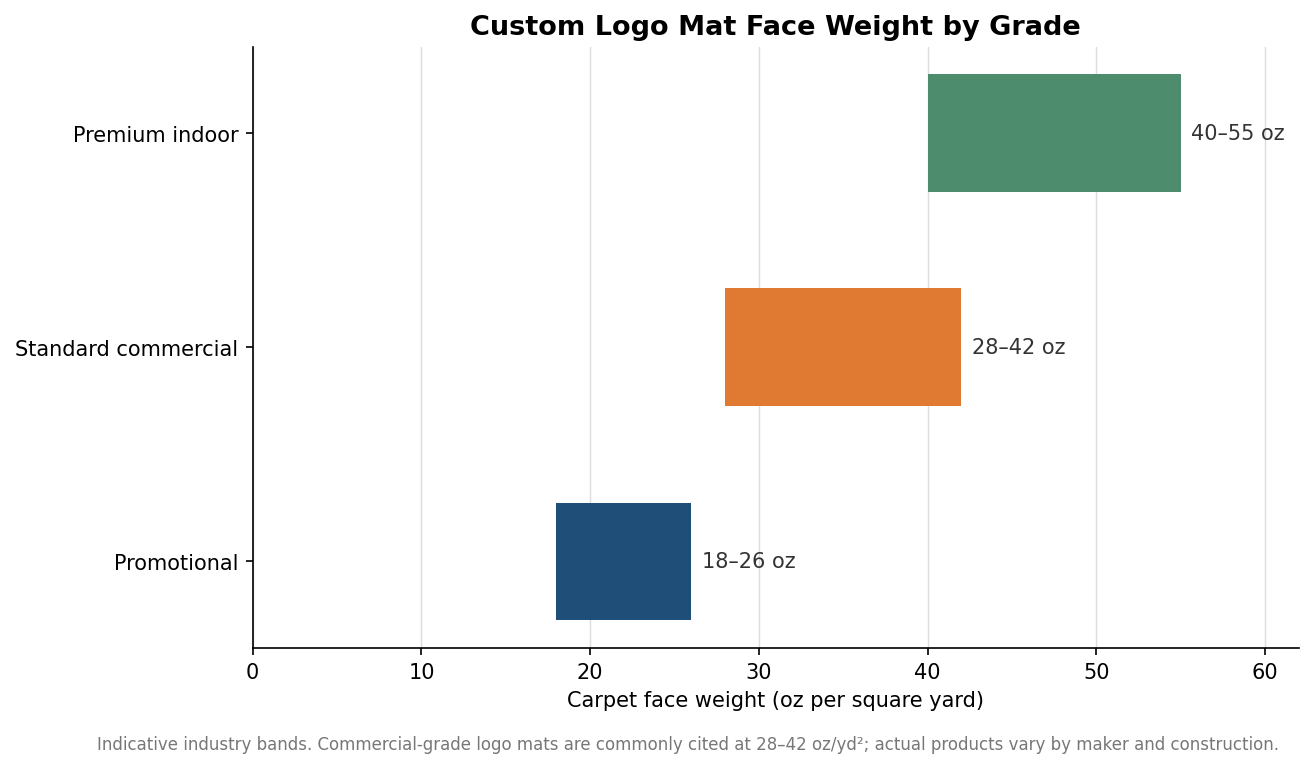
Every custom logo mat is really two products laminated together. The face is the carpet you see and print on, measured in ounces of yarn per square yard, a figure the trade calls face weight. The backing is the rubber or vinyl layer underneath that grips the floor, sheds water, and holds the mat flat. Commercial-grade mats generally run between 28 and 42 ounces of face weight; lightweight promotional mats sit below that, and premium indoor mats can climb higher. A heavier face holds more soil between cleanings and keeps a printed logo sharp longer, but it counts for nothing if the backing curls at the corners or slides on a wet floor. Judge a mat on both numbers, never just one.
Face fibers: nylon, polypropylene, PET and coir
Nylon is the strongest and most resilient of the common face fibers, and it reproduces a logo best: it takes a wide, vibrant color range and handles photographic detail, which is why dye-sublimated lobby mats are usually nylon. It also absorbs moisture and dries quickly, making it the natural choice for an interior wiper mat that pulls water off shoes. Its weaknesses are that heavy traffic can crush and mat the pile over time, and traditionally dyed nylon can fade in direct sun.
Polypropylene, also sold as olefin, is solution-dyed, meaning the color is locked into the fiber as it is made. It will not fade under UV, bleach, or harsh chemicals, and it does not absorb water. That makes it the better fiber for scraper mats and anything that lives outdoors or in a covered entry. The trade-offs are a stiffer, more abrasive hand, fewer color options, and less photographic print quality than nylon. PET, a recycled polyester, is a middle option for buyers who want recycled content with acceptable color and a softer feel. Coir, spun from coconut husk, is a natural, aggressive scraper that is excellent at knocking mud and grit off boots, but it breaks down when it stays wet, can turn slippery as it wears, and belongs only in covered, indoor entrances.
Backings: nitrile, SBR and vinyl
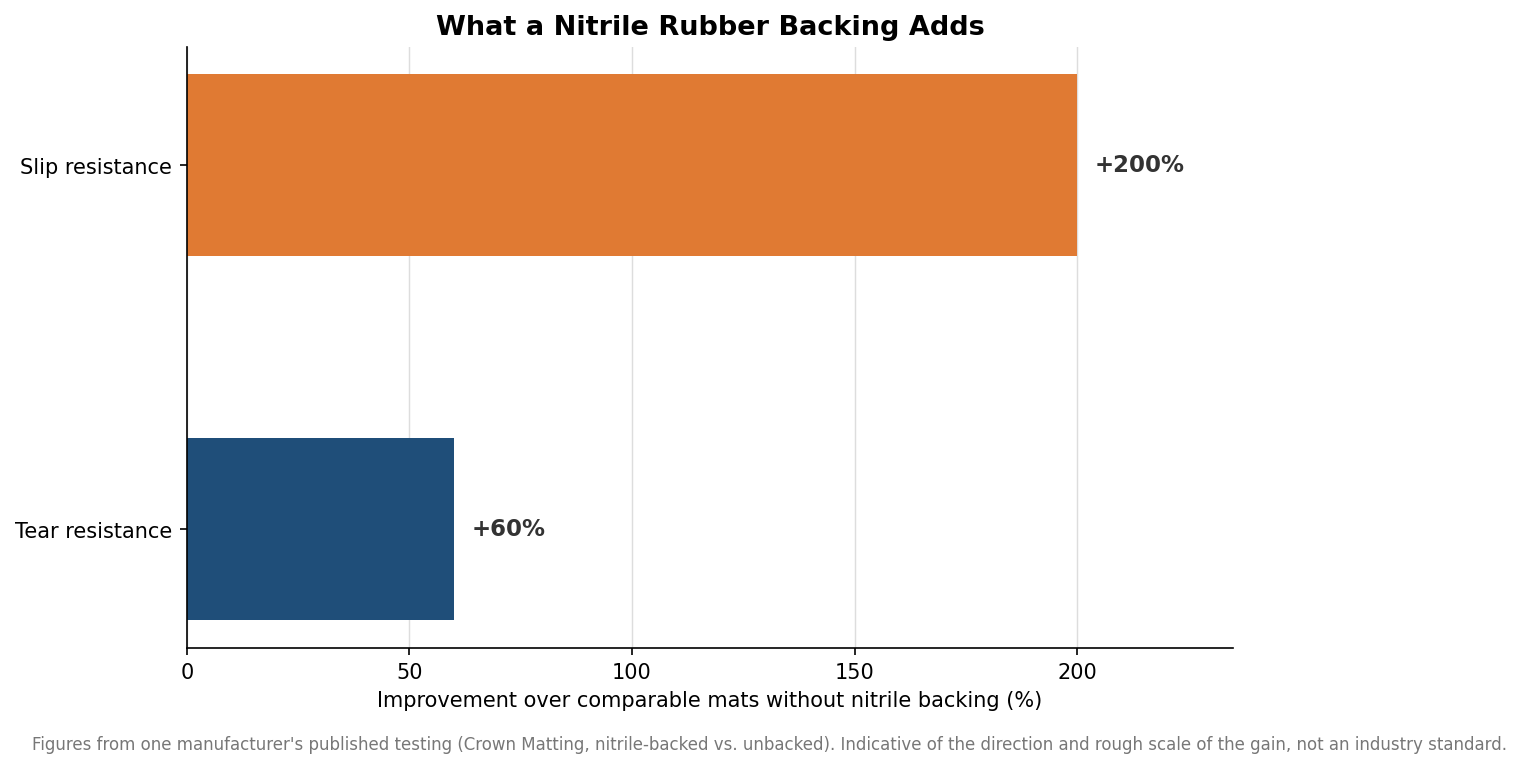
Nitrile rubber is the premium backing and the one to specify anywhere weather, oil, or grease is in play. It stays stable across a wide temperature range, roughly minus 40 to 226 degrees Fahrenheit, so it does not go brittle in a cold vestibule, and it resists oil, fuel, and chemicals that would degrade cheaper compounds. On quality mats it is typically 3/16 to 1/4 inch thick, which is part of why it lays flat and resists curling. SBR rubber is a serviceable entry-level backing: fine for protected indoor use, but with less resistance to cold and oil. PVC or vinyl backing is the lightest and cheapest, common on promotional mats, but it can stiffen and curl in the cold and will not stand up to grease the way nitrile does. If a mat will face the elements, the backing spec is not the place to save money.
Match the material to the placement
The most reliable way to spend a matting budget is by zone rather than by buying one mat to do everything. Outside or in a covered entry, you want an aggressive scraper, a stiff polypropylene or a coir or textured-rubber mat, to knock grit and mud loose before it reaches the door. Just inside, you want an absorbent wiper, almost always nylon, to pull the remaining moisture off shoes. The branded logo mat itself does best as a nylon face on a nitrile backing, placed in the lobby where it is protected from the worst weather and seen by the most people. At registers and prep stations, a thicker molded rubber anti-fatigue mat is a different product again. A two-mat scraper-then-wiper system will outperform a single mat trying to do both jobs, and it protects your printed mat by keeping the abrasive grit away from it.
What to confirm before you approve a proof
Ask the supplier for four things in writing: face weight in ounces per square yard, the fiber type, the backing compound, and the backing thickness. Confirm how the logo is printed, since dye sublimation drives color into the fiber for a photographic, long-lasting result, while surface methods can wear differently. If the mat will see sun, ask specifically about colorfastness, and lean toward solution-dyed polypropylene for exterior placements. Standard footprints such as 3 by 5 feet, 4 by 6 feet, and 3 by 10 foot runners generally print more economically than odd custom cuts, so confirm the finished size early. Where a vendor quotes a service life, treat the number as indicative rather than a guarantee; real-world lifespan depends on traffic volume, how often the mat is cleaned, and whether a scraper mat is doing the hard work upstream. Nail down the material spec and the zone plan, and the mat that shows up will still look like your brand a long time after it ships.